About
Material Authority (MMA) explores the crucial role of mining in shaping Japan’s political, commercial, and social transformations between 1520 and 1720.
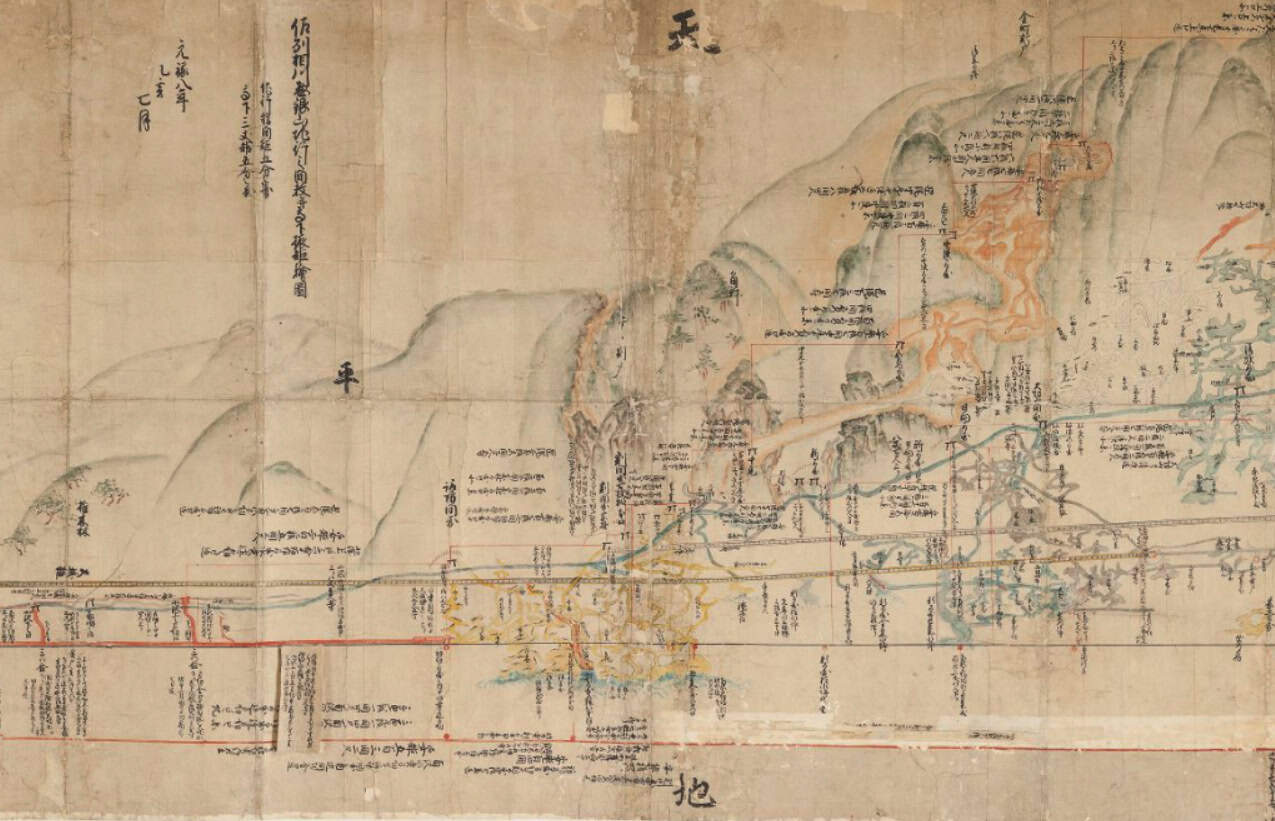
While Japan has long been recognized as a significant mining society, the project argues that the country’s mineral wealth was more than an economic asset—it was central to governance, diplomacy, and state-building. By examining both well-known mines like Iwami and Sado and lesser-studied sites such as Ikuno and Naganoburi, the project investigates how resources authored power in early modern Japan and assesses the “mineral politics” that undergirded the archipelago.
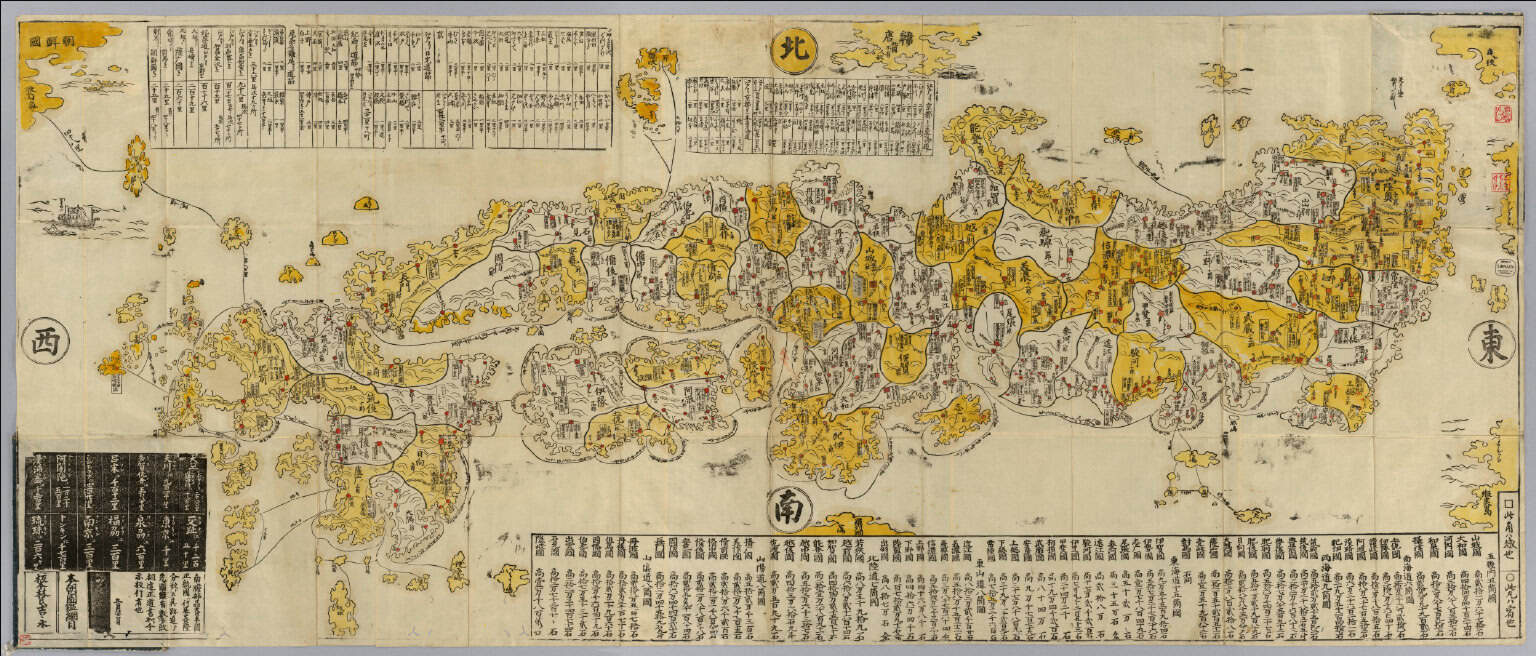
The project expands upon established historical accounts that acknowledge but do not fully incorporate Japan’s mineral production into the story of broader political and economic transformations. MMA will demonstrate how Japan’s rise as a mineral power intersected with landmark shifts, from the consolidation of Tokugawa rule to changes in international trade. The study will engage with scholarship on mining and resource management within East Asian, trans-Pacific, and global contexts, positioning Japan’s experience within a broader framework of extractive economies.
Themes
MMA researchers will develop their work across the following three themes.
Authority
MMA examines how rulers leveraged mineral wealth to establish and maintain authority before, during, and after the contested process of political unification that reshaped Japanese society in the sixteenth and seventeenth centuries. Control over mining sites during this time shifted between Warring States warlords, the Toyotomi regime, and ultimately the Tokugawa shogunate and the daimyo who accepted Tokugawa primacy. Unlike agrarian holdings that were held and maintained by warrior elite, many—but not all—of the archipelago’s most productive mines fell under the direct domain of the Tokugawa house. This consolidation helped solidify the shogunate’s economic base and political supremacy, even as ownership and rights arrangements continued to be the subject of negotiation and contestation. MMA explores how claims to mineral resources influenced territorial disputes, governance strategies, and the broader structure of early modern Japanese rule.
Management
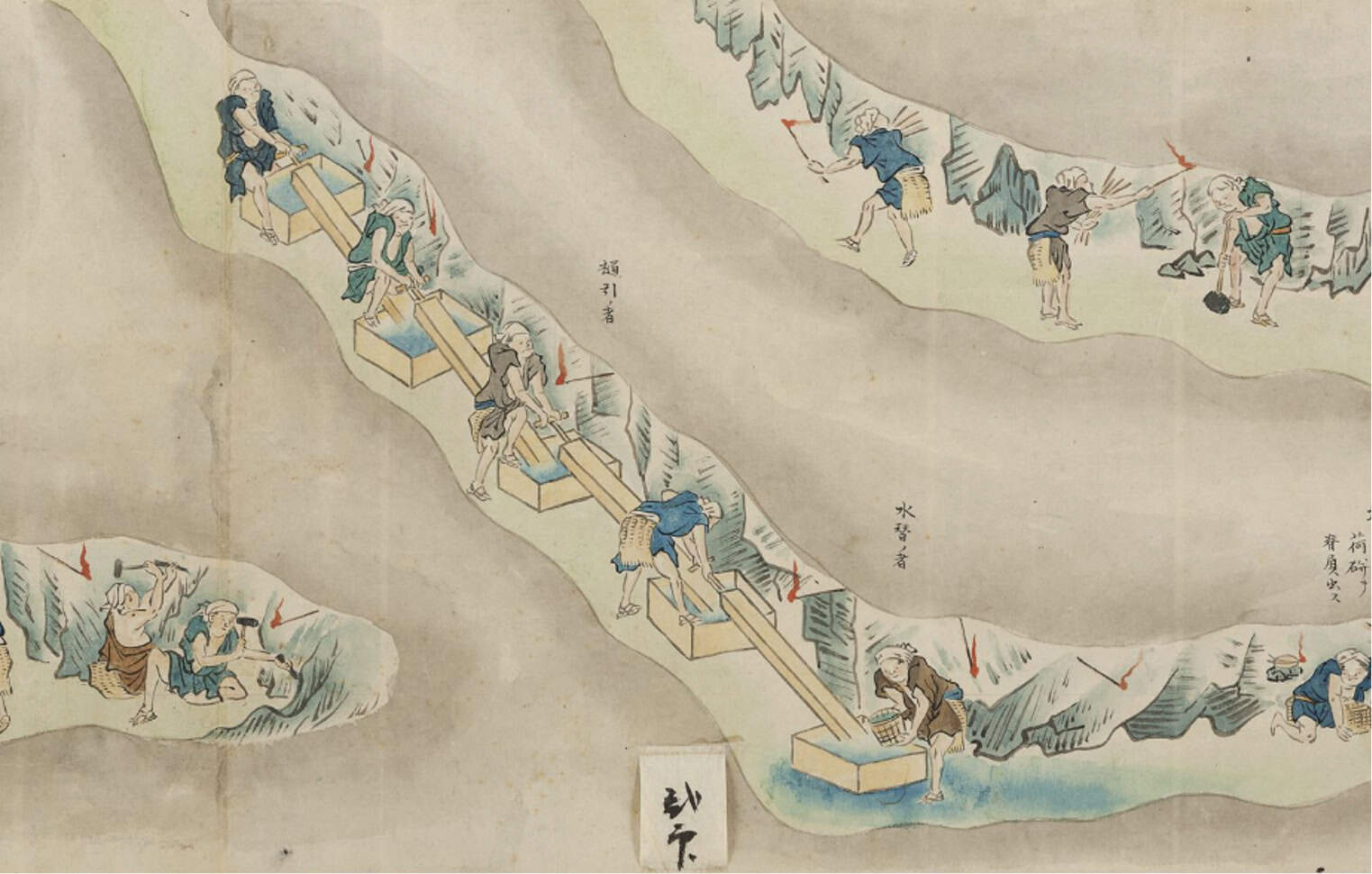
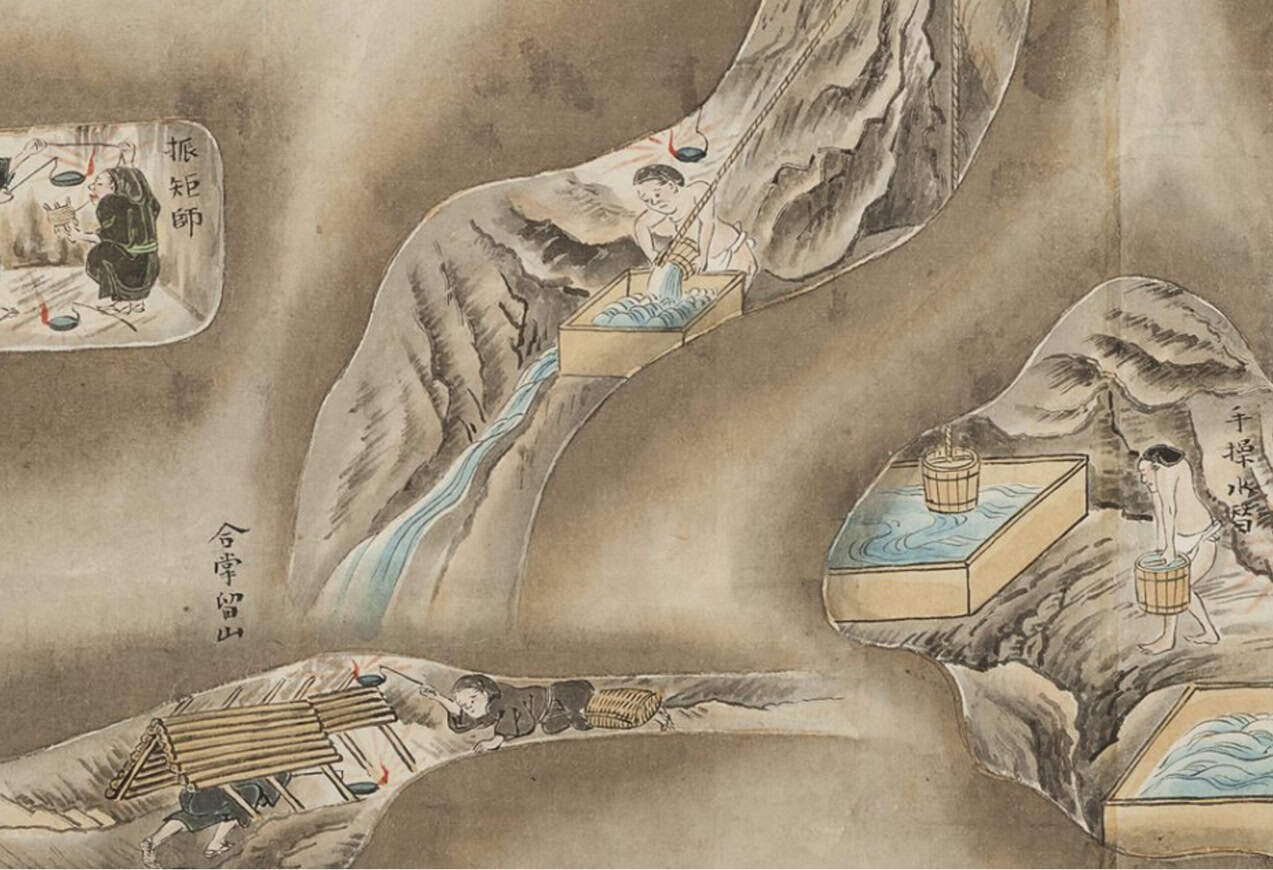
The project explores developments closer to the ground, focusing on the administrative strategies used to regulate and exploit Japan’s mineral wealth across the sixteenth, seventeen, and eighteenth centuries. Dispatched officials and mobile technicians serving authority figures managed mines iterated upon logistical and technical practices to improve yields and connect to a growing transportation and commercial network. These shifts occurred in parallel to similar developments in the oversight and inventory of agrarian resources through cadastral surveys, standardized measurements, and irrigation techniques. Figures like Ōkubo Nagayasu played key roles in both mineral and agrarian politics, though allegations of corruption—sometimes linked to Christianity—complicated mining administration. The project thus explores how mining policies evolved, how they compared to agrarian land management, and how shifting priorities influenced Japan’s economic stability.
Exchange
In addition, MMA investigates how mining facilitated the exchange of ideas, expertise, and practices, both within Japan and in the archipelago’s ever-shifting foreign relations. Domestic silver production made Japan a highly sought-after trade partner in East Asia, even as its aggressive military actions strained diplomatic ties. In the late seventeenth and eighteenth centuries copper took over as Japan’s principal mineral export, shifting the rhythm of foreign trade and domestic production. The project investigates the adoption and adaptation of mining techniques from China, Korea, and Iberian sources across more than two centuries of mineral exchange, assessing the circulation and transformation of practices that helped to define Japan’s encounter with its neighbors and shaped the domestic economy. The study also considers why some European mining practices, such as mercury amalgamation, failed to gain widespread adoption in Japan despite their contemporary prominence in Spanish America and evidence of experimentation within the archipelago.
By situating Japan’s mining history within the broader context of governance, technology, and global exchange, Material Authority offers a new lens on the country’s early modern transformation. The project not only deepens our understanding of Japan’s internal resource politics but also fosters inquiry into the entangled transformations in mineral extraction and human power—political, social, and commercial—across the early modern world.