Project Overview
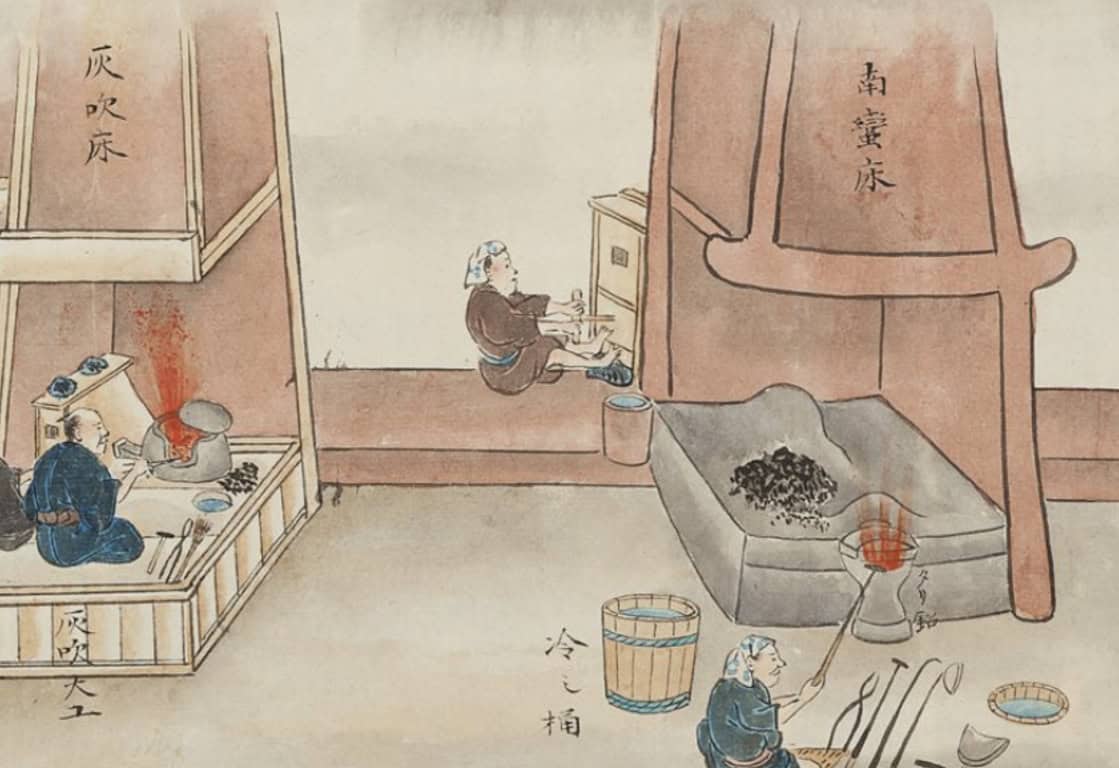
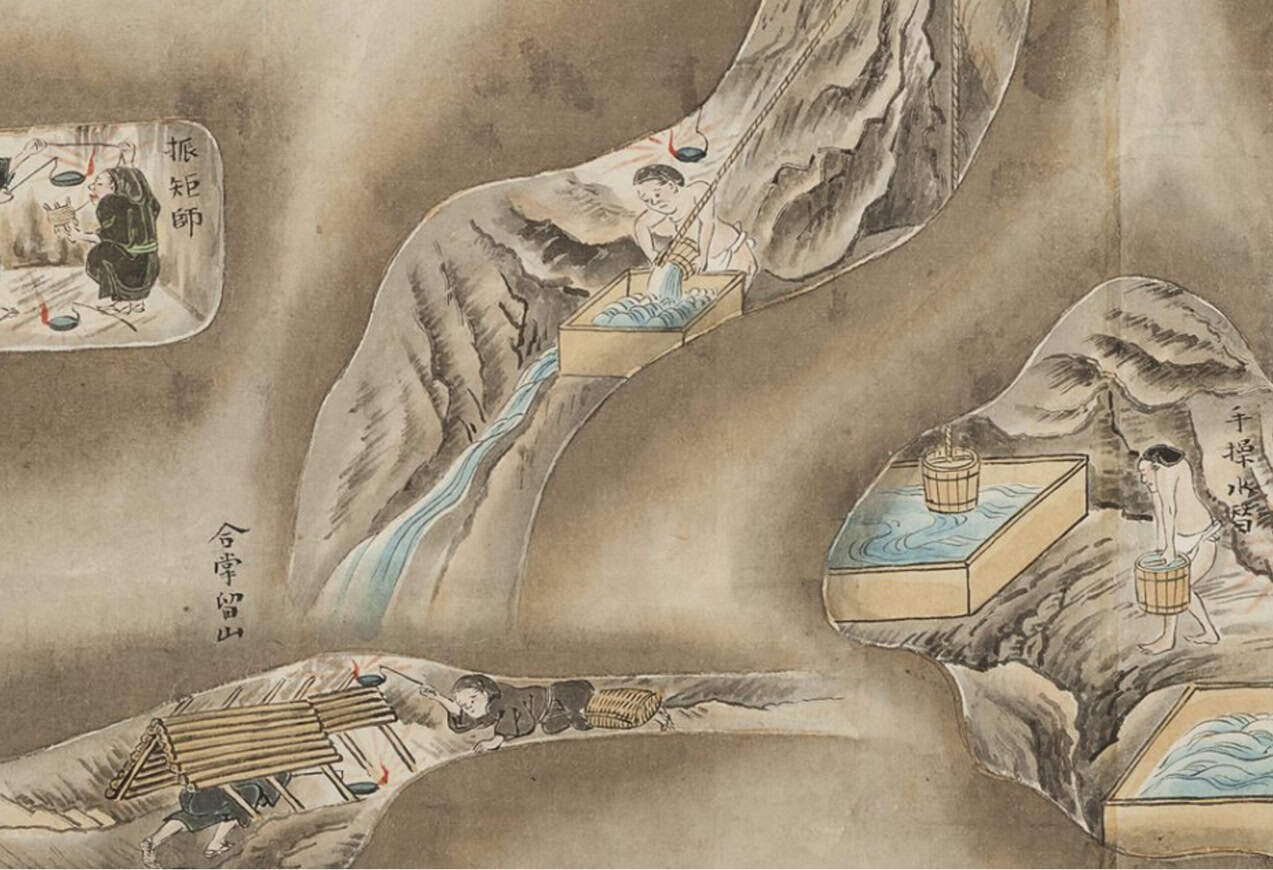
Material Authority (MMA) puts mines and mining at the center of the political, commercial, and social transformations within Japan from 1520–1720.
Recognizing that a boom in precious metals proved instrumental in shaping early modern Japan’s domestic governance and foreign relations, the project proposes the first comprehensive study of Japan’s “mineral politics” during this time. Examining mines well-known (Iwami, Sado) and less-appreciated (Ikuno, Naganoburi) from across the archipelago, MMA departs from quantitative analyses prioritizing mineral production and investigates how authority materialized through mines, and how mines and mineral extraction authored power in Japan. Rich new silver deposits were first tapped in the 1520s; at the turn of the seventeenth century Japan’s silver production was second only to the mines of Spanish America, and at the turn of the eighteenth century it was briefly the world’s largest producer of copper.
Material Authority integrates and interrogates many of the landmark transitions in the sixteenth and seventeenth centuries: protracted conflict yielding to political unification, a rapid expansion and curtailment of foreign relations, and a concerted but incomplete attempt to construct and regulate an agrarian society. Mines and mining occupy a niche in the accounts of these transformations but have never been offered as an organizing principle by which to examine each and their effects on one another. To this end, the project team will pursue three lines of research: exploring how mines shaped authority, catalyzed management, and facilitated exchange. Collaborative work within and beyond the immediate team will model a final goal of Material Authority: to inform inquiry into the entangled transformations in material extraction and human power across the early modern world.
Research Themes & Questions
1. Authority
The sixteenth and seventeenth centuries saw a close relationship between mineral resources and political power in Japan. The control of major centers of precious mineral production shifted between key miliary houses such as the Ōuchi, Mōri, Toyotomi, and Tokugawa, mirroring the military struggles and political settlements of the latter sixteenth century. Mines emerged as a key resource for the Tokugawa, whose control extended over many, though certainly not all, of the key production sites in the seventeenth century. Extractive industry formed a resource base distinct from agrarian holdings, even as the latter predominated official discourse on resource, wealth, and management. The peak of silver production (1580–1620) coincided with early modern Japan’s political unification, yet the link between mining wealth and state consolidation remains underexplored.
Research Questions
- Should we characterize early modern Japan as a mining society? How does doing so sharpen our understanding of Japan at this time, and how might inform Japan’s contribution to broader comparative and global histories?
- How did mineral wealth influence territorial claims in the sixteenth century?
- What was the impact of silver extraction on Japan’s political unification?
- How did rulers conceptualize and regulate non-agrarian wealth?
- How did miners and mining towns fit within Japan’s conception of status?
2. Management
From 1600, Tokugawa officials maximized production at Iwami and Sado, briefly making mining revenue comparable to agricultural taxation. Mines were key to broader administrative reforms, including transport regulation, standardization, and land surveys. Figures like Ōkubo Nagayasu exemplified the intersection of governance, economic ambition, and scandal, as mining operations were entangled with accusations of corruption and Christianity. Given their fluctuating yields and operational lifespans, mines provide a valuable lens to examine shifts in Tokugawa administrative priorities.
Research Questions
- What role did mines play in shaping Tokugawa administrative culture within and beyond the shogunate itself?
- What defined effective mine management? How did mining scandals, including those linked to Christianity, unfold?
- How did mine assessment compare to agrarian land surveys?
- What were the key similarities and differences in mines devoted to precious and non-precious metals? What do we learn when we look beyond silver?
- How does our understanding of mining change when we shift focus from material outputs (gold, silver, steel) to inputs (lead, mercury, charcoal)?
3. Exchange
Japan’s mineral wealth played a crucial role in its early modern foreign relations. Despite tensions following Hideyoshi’s invasions of Korea, Japan remained a key silver exporter in East Asia. By the late seventeenth century, silver was replaced by copper as Japan’s primary mineral export, marking a shift in global trade dynamics. Meanwhile, interactions with Iberian powers offer a largely untapped field of study, particularly concerning Japan’s engagement with European mining techniques, such as mercury amalgamation, and potential knowledge exchanges with missionaries and traders.
Research Questions
- How did the management of mineral resources influence Japan’s foreign relations?
- What role did mercury amalgamation play in early modern Japanese mining? How did silver trade affect Japan’s ties with Iberian powers?
- How do Japan’s “mineral politics” compare with those of other mining powers in the early modern world?